
Citywide Cleaning Company · Workplace Hygiene Guide · 2026
How to Reduce Employee Sick Leave: A Year-Round Workplace Hygiene Guide
Most workplace sick leave comes from minor, preventable illnesses spread through shared surfaces, washrooms, kitchens and stale air — not from winter alone. Reducing it is a year-round discipline of consistent hygiene and genuine care for your people.
Cold-and-flu season gets the blame, but the bugs that empty your desks circulate all twelve months. The lever you actually control is hygiene.
This guide covers how illness really spreads at work, the hygiene measures that cut absence, a season-by-season plan, and the culture of care that makes it stick.
The Short Answer
To reduce employee sick leave year-round, focus on five things: daily sanitising of high-touch surfaces, proper washroom and kitchen hygiene, good ventilation and air quality, periodic deep cleaning, and a culture of care that gives people the hand-hygiene tools they need and the permission to stay home when ill. Winter matters — but so do spring allergens, summer stomach bugs and the autumn back-to-office surge.
Key Takeaways
- It's not a winter problem. Minor illnesses are the single biggest cause of UK sickness absence — and they spread all year.
- The numbers are real. The ONS reports UK workers lost an average of 4.4 days each to sickness in 2025 — 148.8 million working days in total.
- Surfaces, washrooms, kitchens and air are where transmission happens. Each is a hygiene lever you control.
- Consistency beats the one-off. A scheduled daily programme reduces absence far more than a seasonal deep clean alone.
- Care matters as much as cleaning. Around two-thirds of employees admit to working while ill — presenteeism spreads infection.
- It pays for itself. Avoided absence and protected productivity routinely outweigh the cost of a proper hygiene contract.
Related Services
The Reframe
Sick leave isn't just a winter problem
Winter gets the blame because colds and flu peak in the cold months. But the data tells a broader story. According to the ONS, minor illnesses — coughs, colds, stomach bugs — are the single biggest cause of UK sickness absence, and they circulate every month of the year. Treating absence as a December-to-February issue means leaving the other three seasons unmanaged.
Each season simply changes the threat, not the principle:
- Winter: cold, flu and norovirus thrive indoors with windows shut and people packed together.
- Spring: pollen and allergens drag down anyone prone to hay fever; dust disturbed by spring works adds to it.
- Summer: heat, food left out in kitchens and harder-working washrooms raise hygiene and stomach-bug risk.
- Autumn: the back-to-office surge concentrates people again and resets the transmission cycle.
The constant across all four is the workplace environment itself — and that is the part an employer can actually control. Our companion piece on office hygiene and its impact on business goes deeper on the evidence.
The Mechanism
How illness actually spreads at work
Transmission in an office is predictable. It happens in four places, and each responds to a specific hygiene measure:
High-touch surfaces
Door handles, lift buttons, shared keyboards, phones, printer screens and kitchen taps collect and pass on germs between dozens of hands a day.
Washrooms
The highest-risk room in any building. Inadequate cleaning, empty soap dispensers and poor ventilation turn it into a transmission point.
Kitchens & breakrooms
Shared fridges, microwaves, kettles and worktops — food residue and shared contact make these a year-round hotspot.
Air & ventilation
Stale, poorly ventilated air keeps airborne particles circulating. Dust and allergens build up where cleaning doesn't reach.
One person arriving unwell in an under-cleaned office will infect a far higher share of colleagues than the same person would in a regularly sanitised one. The cost isn't only the sick days — it's the knock-on hit to projects and deadlines when several people are out at once.
The Measures
The hygiene measures that reduce sick leave
These are the controllable levers — the practical core of any programme to keep a workforce healthy through the year.
Touchpoint sanitising
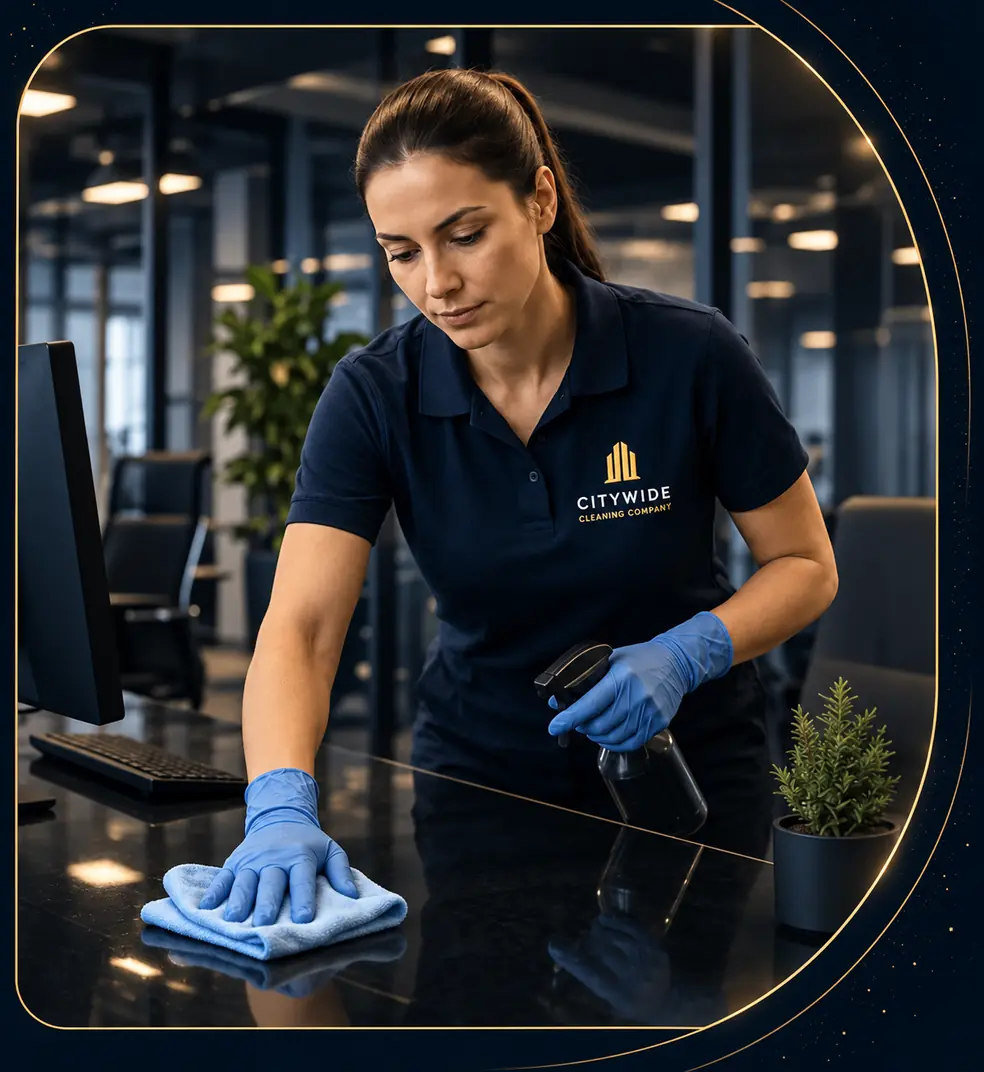
Targeted disinfection of handles, switches, rails, shared devices and taps on every visit — not just surface dusting.
Washroom hygiene
Full sanitisation, restocked soap and sanitiser, and odour and ventilation control. The highest-impact room to get right.
Kitchen & breakroom
Sanitised worktops, sinks and appliance touchpoints, with waste removed before it becomes a hygiene issue.
Air & ventilation
Reducing dust and allergen build-up, supporting good airflow, and keeping vents and surfaces clear.
Deep cleaning
Scheduled intensive cleans reaching what daily routines can't — the reset that stops grime and germs accumulating.
Consumables & waste
Soap, sanitiser and tissue never run out; bins are emptied before they overflow. Simple, and constantly neglected.
The two highest-leverage upgrades for most offices are washroom hygiene services and periodic deep cleaning services — the areas daily routines most often under-serve. For the full scope of what a programme can include, see what commercial cleaning covers.
Year-Round Plan
A season-by-season hygiene calendar
Same principles, shifting priorities. Use this to keep the programme active all year rather than reacting in January.
Cold, flu & norovirus
Step up touchpoint frequency, prioritise washroom and kitchen sanitising, keep sanitiser stocked, and respond fast to any outbreak with targeted disinfection.
Allergens & reset
A spring deep clean to clear winter dust and allergens; attention to soft furnishings, carpets and vents for hay-fever sufferers.
Heat & food hygiene
Harder-working washrooms and kitchens, more frequent waste removal, and odour control as temperatures rise.
Back-to-office surge
Occupancy climbs again — review frequency, refresh the deep clean, and prepare for the winter season before it starts.
Beyond Cleaning
Care, not just cleaning
Hygiene infrastructure only works alongside a culture that lets people use it. The biggest single driver of office outbreaks isn't a missed clean — it's the employee who comes in unwell. Work Foundation research found that around two-thirds of employees have gone to work while ill when they felt they should have stayed home. Every one of them is a transmission risk.
- Make it safe to stay home. A clear, fair sick-leave policy that doesn't punish absence is the most effective anti-infection measure most employers overlook.
- Make hand hygiene easy. Visible sanitiser stations, well-stocked washrooms and soap that never runs out remove the friction.
- Use hybrid sensibly. Encourage anyone with symptoms to work from home where the role allows, rather than tough it out at a shared desk.
- Communicate during outbreaks. When something is going round, a quick reminder plus a visible increase in cleaning reassures staff and slows spread.
This is the "care" half of the equation — and it costs little. The cleaning programme protects the building; the culture protects the people in it.
The Business Case
What sick leave actually costs — and how hygiene compares
The ONS reports an average of 4.4 days lost per worker in 2025, totalling 148.8 million working days across the UK. For a single office, multiply your headcount by your day rate and the loaded cost of cover and disruption, and the annual figure is rarely small.
Against that, a structured hygiene programme is a modest, predictable line. The question isn't whether you can afford proper cleaning — it's whether you can afford the absence that under-cleaning quietly causes. For how cleaning investment translates into broader business value, see how office cleaning improves your business; for current rates, our breakdown of office cleaning costs in London sets expectations before you request a quote.
Putting It In Place
What to put in place — and what to ask your provider
Whether you manage cleaning in-house or contract it out, these are the components of a programme that actually reduces absence. When choosing a provider, our guide on how to choose a cleaning company covers what to insist on.
Must have
- A written specification naming touchpoint sanitising, washroom and kitchen hygiene as daily tasks
- Reliable consumables supply — soap, sanitiser and tissue never running out
- A periodic deep-cleaning schedule, not just daily routines
- Trained, vetted operatives and the right disinfection products (with COSHH data sheets)
Should have
- The ability to step up frequency or deploy targeted disinfection during an outbreak
- A quality-audit process so standards don't quietly drift
- Frequency reviewed against actual occupancy at every renewal
How We Help
Healthier London workplaces, all year round
Citywide builds hygiene into every contract from day one — daily touchpoint sanitising, full washroom and kitchen hygiene, periodic deep cleaning, and the ability to step up fast when something is going round. All operatives are DBS-checked and COSHH-trained, with a named account manager and same-day absence cover so the programme never lapses. We deliver office cleaning in London across all central zones and the surrounding boroughs.
FAQ
Frequently asked questions
Does office cleaning really reduce sick leave?
It reduces the transmission of the minor illnesses that cause most absence. Regular sanitising of high-touch surfaces, proper washroom and kitchen hygiene, and good air quality all lower the chance that one unwell person infects the wider team. It's risk reduction, not a guarantee — but across a year it makes a measurable difference.
Is sick leave only a winter issue?
No. Winter brings cold and flu, but minor illnesses circulate all year, and each season has its own drivers — spring allergens, summer stomach bugs and food hygiene, and the autumn back-to-office surge. A year-round programme beats a seasonal reaction.
Which areas matter most for workplace hygiene?
High-touch surfaces, washrooms, kitchens and ventilation. Washrooms and kitchens are the highest-risk rooms, and shared touchpoints are the main transfer points — which is why daily sanitising of these areas has the biggest impact on absence.
How often should an office be cleaned to keep staff healthy?
For a fully occupied office, daily cleaning with daily attention to washrooms, kitchens and touchpoints is the standard, supported by periodic deep cleaning. Hybrid offices may need fewer full visits but should keep high-risk areas on a daily or near-daily schedule. Review frequency against actual occupancy at every renewal.
What can we do beyond cleaning to cut absence?
Make it culturally acceptable to stay home when ill — presenteeism spreads infection — keep hand sanitiser and soap freely available, use hybrid working sensibly for symptomatic staff, and communicate clearly during outbreaks. Care and cleaning work together.
This article offers general workplace-hygiene guidance and is not medical advice. Figures are drawn from ONS sickness-absence data (2025) and Work Foundation research.
Ready When You Are
Build a healthier workplace, all year round
Tell us about your office and we'll design a hygiene programme around how it's actually used — daily sanitising, washroom and kitchen hygiene, and deep cleaning that keeps absence down. Trusted for office cleaning in London by businesses that can't afford to lose people to preventable illness.